By Jax McKinnon
Photos courtesy of Rizalubun and Matt Kieffer, under the Creative Commons Attribution-Share Alike 4.0 International and 2.0 Generic licenses
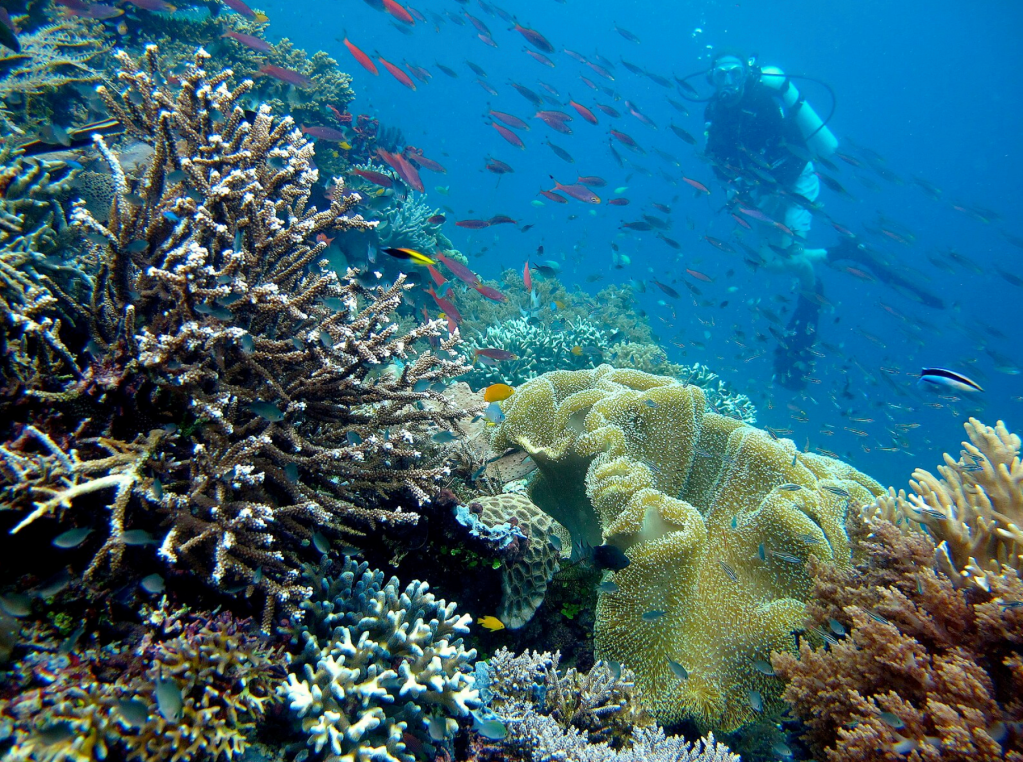
Coral reefs are easily one of the most important habitats on our earth. They are one of the most biodiverse ecosystems, harboring 25% of marine species while only occupying 1% of the ocean floor. Reefs provide a safeguard for all sorts of functions, such as reproductive sanctuaries, vital food chain relationships, and photosynthesizing organisms. Unfortunately, these reefs are rapidly dying due to preventable factors. As a result of climate change and our exploitation of the ocean’s resources, the equilibrium of the ocean has been offset. The repercussions of this loss are astronomical as our ecosystems are quickly changing and collapsing, affecting everything in the sea and on land. Researchers have been tirelessly working to try and remedy the devastating effects we’re seeing on our oceans through solutions like artificial reefs and lab-raised coral.
Corals are anthozoans and are the largest class in the phylum Cnidaria, which includes jellyfish, anemones, and sponges. There are 6,000 known species of coral living in all parts of the ocean, all the way from epipelagic to the bathypelagic zone. Reef-building corals live in tropical climates near coastlines allowing corals plenty of warmth and sunlight to photosynthesize and thrive. Coral is made out of calcium carbonate, which is a brittle, sharp, white substance. Inside the majority of reef corals are symbiont algae cells called zooxanthellae, a name for single-celled dinoflagellates. These algae photosynthesize for the coral and provide up to 90% of its nutrients, giving the coral their vibrant color. In return, the coral provides a safe place for the cells to live with ample access to sunlight. Coral is easily stressed, factors such as changing salinity or water temperatures can quickly cause it to mistake the zooxanthellae as a threat and expel them. This leaves only the calcium carbonate shell causing them to display the white “bleached” look we associate with dying reefs. While vulnerable and starving, the corals, at this point, are not actually dead. Their main source of nutrition is gone, but that doesn’t mean they starve immediately. Coral can still bounce back after this happens if the stressor remedies itself, allowing the coral to reaccept the algae and continue thriving.
The problem arises when the stressor persists, which is what we are seeing now with mass amounts of reefs that are dying. Things such as global warming are affecting the health of reefs and at our current rate, aren’t showing signs of stopping. The changing water temperatures, currents, and salinity of the ocean are things that cannot be fixed quickly as they are attached to a complicated web of reactions that are slowly, and detrimentally, being changed. Researchers have been experimenting with different ways to help coral become, or stay, more resilient as our climate is sinking deeper into crisis. According to Oregon State University, simulating stressful conditions in lab settings proves effective in seeing which species of coral are most resilient. Scientists are also creating structures that simulate healthy reefs made of rock and coral polyps and placing them next to dying reefs to encourage the dying reefs to repopulate. This encourages organisms like fish and crustaceans to come back to the dying reef which in turn helps them to regrow.

The coral genus, Acropora, has been having the most success according to a case study using artificial reefs in Wasini Island, Kenya, with a survival rate of 97.5 percent. While the future of ocean health is looking bleak, and many conservation efforts are being torn down right now by the Trump Administration, scientists and researchers are looking for, and finding new options. Over 60% of the world’s reefs are bleached right now, and as this number increases, it’s important to be conscious of your impact on the environment, as well as the things you can do to reduce your carbon footprint and live consciously of what your actions affect. Reefs are incredibly important to the harmonious lattice of the ocean, and for the sake of every living thing on earth, protecting them should be a top priority.







 The Golden Trident
Leave a comment