Series and Photos by Lila Qualteri
“So what is your guys’ favorite drink?”
“Alani, Redbull, Monster!”
Scattered energy drink flavors floated around the room. This was an actual conversation between a visiting physical therapist and children aged 10 to 12 at a recent dance intensive I attended. I was shocked that children this young were already addicted to sugary energy drinks before they had even reached their teenage years. But to be honest, I felt no better about it, I had already had my morning Redbull.
Most days, I don’t go without some sort of caffeinated beverage, and I remember starting this ritual as early as eighth grade. Because things like energy drinks are so readily accessible, we don’t perceive them as a significant issue. They’re cheap, legal, and they give you that feeling that you will continue to chase, which is what makes them so addictive.
When we think of addiction, we think of ‘illegal’ things like drugs, vaping, drinking, cigarettes, etc. We don’t think of things like dangerous food dye or hidden sugars. But energy drinks are like any other addiction. Many studies have shown that people can even have caffeine withdrawals, with symptoms such as headaches, fatigue, or irritability.
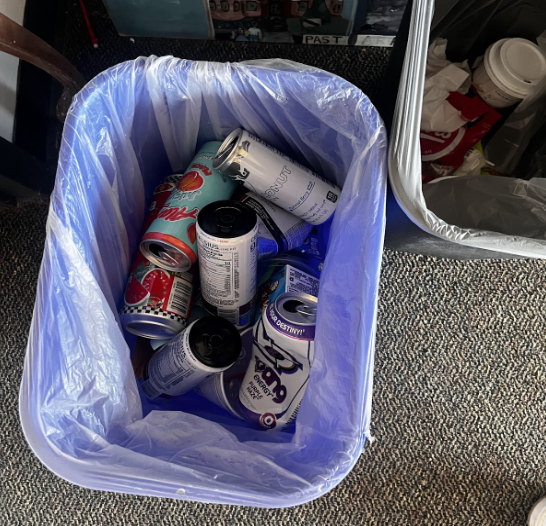
It doesn’t seem like much of a problem, but how many energy drinks do you think you could count in one day of school, or at the gym? Have you noticed the recycling bins at school overflowing with empty cans that were finished within minutes? Why are energy drinks so addictive, and why are we so dependent on them?
For starters, the average energy drink contains 50 grams of sugar, which is equivalent to around eight cookies. Sugar can often be another addictive substance, and that, paired with caffeine or taurine, is a recipe for addiction.
One important thing to note is that caffeine and taurine are both stimulants; however, taurine is a much more natural substance that comes from protein-rich foods and it is often put in energy drinks, whereas caffeine is typically found in coffee. While both have their costs and benefits, their main difference is that caffeine is used in mental function and increases brain productivity, while taurine increases muscle maintenance and can improve athletic performance. This is why you often see people at the gym with a Monster, rather than a cup of coffee. Either way, both are highly addictive and are meant to be so.
This is not a message to mix the two and see if you can become a functioning human, because, surprisingly, humans have been able to function long before the creation of coffee and energy drinks. Unfortunately, almost 30% of U.S. adults and teens have an energy drink daily, while around 10% find themselves dependent.
So what other options are there? Believe it or not, a drink as simple as water does help your mind and body improve! Water, tea, smoothies, and protein shakes will all benefit you physically and mentally, and not have nearly as much of a negative impact. Of course, in today’s world, we must remain wary of even our healthy options. Refrigerated drinks have high sodium, water bottles have microplastics, and fruit in our smoothie has pesticides.
It seems like it is just impossible to live a healthy lifestyle. But water from the sink or even tap is much more natural, making a smoothie from home allows you to see what you are drinking, and many local or small businesses take large precautions to make sure their resources are healthy and available.
This is not an article meant to bring shame or fear because we all struggle with the smaller everyday things. However, it is meant to bring awareness. This school year, maybe we can all begin with healthier options for our bodies. It can be hard to break the cycle of addiction, but if we don’t, we might as well become walking zombies. Pack a smoothie, bring a water bottle, and good luck this year, Demons!





 The Golden Trident
Leave a comment