By Kelly Stockdale
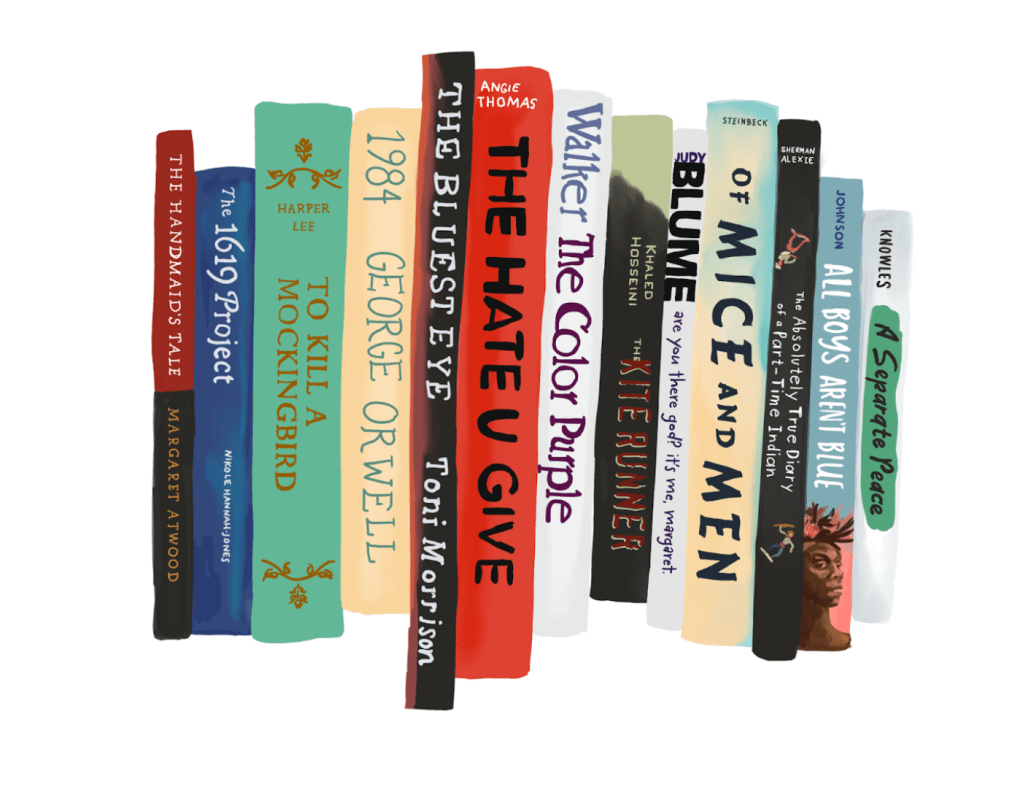
Art courtesy of Martha Park
In classrooms and libraries across the United States, an unsettling trend is gaining momentum: the banning of books. Under the banner of “protecting children”, school boards and lawmakers are stripping the shelves of titles that inspire, challenge, and reflect the complexity of real life. What’s being censored isn’t hate speech or any obscenity, its identity, history, and the truth about the world.
Book banning is not a new phenomenon, but its recent resurgence is concerning. According to PEN America, over 6,000 book bans across 23 states were enacted during the 2024-2025 school year alone. The targets? Books by LGBTQ+ authors, books about race and racism, and novels that dare to tell uncomfortable truths. Titles like The Bluest Eye by Toni Morrison, All Boys Aren’t Blue by George M. Johnson, The Handmaid’s Tale by Margaret Atwood, and even in Colorado, Gender Queer: A Memoir by Maia Kobabe are among the most frequently challenged. The only “crime” these books are committing is offering perspectives that don’t fit neatly into the government’s sculpted narrative. Some books are seen as dangerous, but the real danger lies in silencing these voices altogether.
School should be a place where students learn to think critically, engage with different perspectives, and grow as individuals, but shielding students from doing so doesn’t protect them. It stuns their intellectual and emotional development. When we erase certain stories, we erase the people and message behind them. That’s not education—it’s plain censorship.
Something else that book banning disproportionately affects is marginalized communities. When books about LGBTQ+ characters or Black history are removed from shelves, it sends a message that their story doesn’t belong here, that their feelings should be disregarded. This exclusion not only harms students who see themselves in those pages, it deprives all students of the opportunity to learn empathy and compassion towards minorities.
The irony is stark. In a country that used to pride itself on freedom of speech and expression, we are witnessing the suppression of ideas at the earliest stage of learning. If we want to prepare students for a diverse and globalized society, we must stop treating books as threats and start treating them as tools to become better humans. This is not just a school issue; it’s a democratic issue. A society that bans books is a society trying to control what the next generation is allowed to think, and history has taught us where that path leads.



 The Golden Trident
Leave a comment