By Zack Wofsey
Photos courtesy of linkedIn
When most people imagine a physicist, they are likely thinking of someone with a white lab coat covered in chalk marks, scribbling equations on a blackboard, much like some may see in a movie or on TV. But upon speaking with Mike Wofsey, a principal researcher working in medical and public health physics, he was adamant that my mental image wasn’t exactly what the job is. He explained that physics is “actually really lonely.“ Much of the time you may even be one of only a handful of people in the world researching your particular area, which is how I first learned that my preconceptions were off.
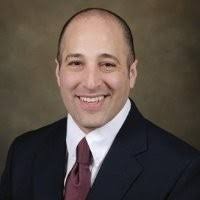
Wofsey didn’t always plan on pursuing research in public health. Initially, he was going for a standard physics route, but when working toward his Ph.D., he needed an advisor on the outside, which led him to meet and discuss his physics research with a physicist at Lawrence Livermore National Laboratory. This one physicist posed the question, “Why are you wasting your time on normal physics research when you could be improving people’s lives and increasing the number of people who are living on Earth?”
Wofsey claims he had never thought of it like that before, but once he saw his advisor thriving, he decided to give it a chance.
That one conversation turned around his entire life’s pursuit.
Even after making the switch from standard physics, his path was anything but simple. The very first thing he developed after receiving his Ph.D. was a solar desalination device, which is a tool that utilizes the sun to turn salty or dirty water into safe drinking water in case of natural disasters or earthquakes. However, just because someone invented something doesn’t make it a business, which helps explain why he continued working with the Department of Energy for roughly seven years before he could freely pursue medical and public health physics on his own.
Not only is his current research possibly one of the most difficult in the field of physics, but he also faces unique challenges in dealing with the U.S. Food and Drug Administration (FDA). Currently, he is trying to devise a machine that extracts potentially hazardous impurities directly from a human’s bloodstream, which could potentially be utilized for diseases such as leukemia, cancer, sickle cell disease, and even sepsis, and he admitted it will likely take longer for this machine to be cleared by the FDA than it will to research how to make it.
He also described his approach to research as significantly altered compared to his days as an undergraduate, when, in order to design something, it was crucial to begin with a rudimentary knowledge of physics, unlike today, where, since he has years of background work already established, he can jump right into the middle of the problem.
The project he was most proud of was actually a very personal undertaking for him. He is currently working on a device that can treat anaphylaxis, which is a serious allergy that his daughter suffers from. He reported that approximately 60% of the 1000 or so people who show up to the emergency room for anaphylaxis symptoms may not even have successfully used their EpiPen in time, and his invention functions more like an inhaler (but delivering epinephrine instead of asthma medication), which will hopefully be an easy way for him or his daughter to use should they ever be in that situation.
Not all that he worked on, however, has succeeded, and he readily acknowledged that. Hundreds of thousands of people can benefit from treatments for sickle cell disease, while 20 million could benefit from his sepsis research. His reason for fighting the detrimental effects of air pollution has similar motivations, so he invented a device to remove hazardous particles from air with what seems like the most elegant physics known to man, using the principles that explain the rings of Saturn.
When asked where he sees his specific area going and how he thinks he will fit into it, Wofsey agreed that doctors and surgeons will likely profit greatly from his work but believed he would “not get much credit”. Patients likely perceive a doctor or surgeon who says that they have “turned on the switch“ the most helpful individual; however, it is the physicist who dedicated years to the discovery of how to build and manipulate that switch in the first place that makes their role truly indispensable, and he sees that fine by him.


Leave a comment